Accusations of corruption and cover-ups have been categorically dismissed by the Malacañang Press Corps (MPC) following claims that journalists accepted payments to suppress details about President Ferdinand Marcos Jr.’s medical condition.
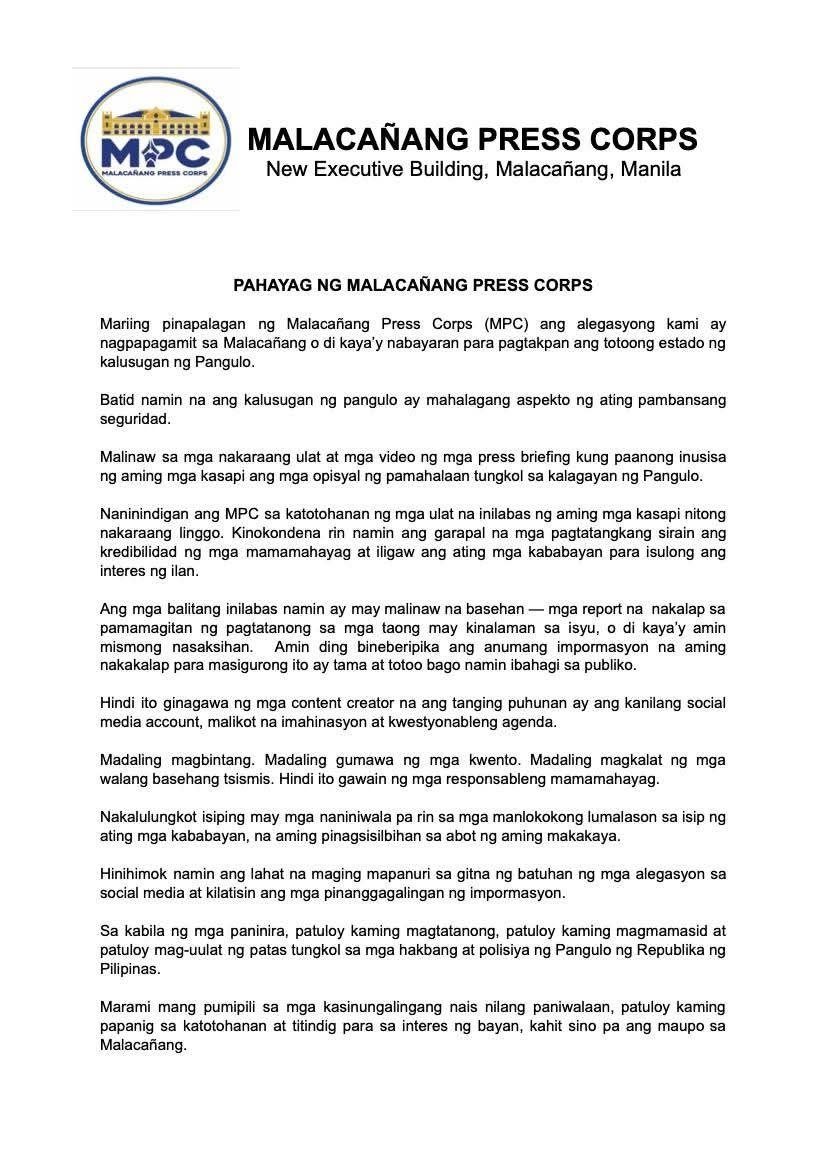
The press organization released a detailed rebuttal on Sunday from Manila’s New Executive Building, addressing growing public scrutiny over their coverage of presidential health matters during recent weeks of intense speculation.
Professional journalists covering Malacañang have faced mounting pressure to explain their reporting practices, with critics suggesting financial incentives influenced their coverage of sensitive health-related information.
Journalists Challenge Corruption Claims
“We strongly reject allegations that we are being used or have been paid by Malacañang officials to cover up the true state of the President’s health,” declared the MPC in their comprehensive response to mounting criticism.
The press corps highlighted extensive video documentation showing reporters consistently pressing government officials for health updates during official briefings, contradicting suggestions of journalistic complicity or negligence.
Their statement emphasized rigorous verification processes behind recent reporting, with the organization maintaining that all published information underwent proper fact-checking procedures before public release.
Verification Standards Under Scrutiny
According to the MPC, presidential health information represents a critical national security matter requiring careful handling and accurate reporting based on verified sources rather than speculation or rumor.
“The MPC stands by the accuracy of the reports released by its members over the past week,” the statement affirmed, defending the professional standards maintained throughout their coverage of sensitive developments.
The organization stressed that their reporting methodology involves direct questioning of relevant officials and eyewitness accounts, followed by thorough verification before publication.
Social Media Misinformation Concerns
Sharp criticism was directed at what the press corps characterized as deliberate efforts to damage journalistic credibility while promoting misleading narratives for partisan purposes.
The MPC statement, originally released in Filipino, drew clear boundaries between professional news gathering and social media content creation, emphasizing fundamental differences in verification requirements and source credibility standards.
“The news we publish has a clear basis — reports gathered through questioning people involved in the issue, or what we have witnessed ourselves. We also verify any information we gather to ensure it is accurate and true before sharing it with the public,” explained the organization.
Digital Age Information Challenges
Content creators and social media personalities faced harsh criticism from the press corps, who described them as individuals whose “only capital is their social media account, active imagination, and questionable agenda.”
The statement highlighted concerning trends where unverified claims gain widespread circulation despite lacking proper sourcing or fact-checking, creating confusion about legitimate news versus speculation.
Professional journalism’s methodical approach was contrasted with social media’s rapid-fire information sharing, where “it is easy to make accusations, easy to create stories, easy to spread baseless gossip” without accountability measures.
Public Urged Toward Media Literacy
Expressing frustration over public trust in unverified sources, the MPC described disappointment that citizens believe “deceivers who poison the minds of our countrymen, whom we serve to the best of our ability.”
“We encourage everyone to be discerning amid the exchange of allegations on social media and to examine the sources of information,” urged the press organization in response to widespread misinformation circulation.
The call for enhanced media literacy comes as conflicting narratives proliferate across digital platforms, often without proper source attribution or verification processes.
Professional Commitment Reaffirmed
Despite facing character attacks and credibility challenges, the MPC emphasized unwavering dedication to journalistic principles and public service responsibilities.
“Despite the attacks, we will continue to ask questions, continue to observe, and continue to report fairly on the actions and policies of the President of the Republic of the Philippines,” declared the comprehensive statement.
The organization pledged continued adherence to truthful reporting standards regardless of political pressure or public opinion shifts, promising to “continue to side with the truth and stand for the interests of the nation, no matter who sits in Malacañang.”
Balancing Transparency and Security
Recognition of presidential health information’s national security implications was acknowledged by the press corps, highlighting complex considerations surrounding transparency versus security concerns in sensitive reporting.
This delicate balance requires journalists to weigh public interest against potential security risks when covering matters affecting national leadership and stability.
The controversy underscores broader challenges facing Philippine media organizations as they navigate digital-age information landscapes where traditional reporting competes with unverified social media narratives.
The MPC’s response represents a broader defense of professional journalism standards amid increasing skepticism toward mainstream media and growing influence of alternative information sources lacking traditional verification protocols.